

Table of Contents
- The Psychological Triggers Behind Fast Fashion Traps
- How to Identify Quality Clothing Before You Buy
- Decoding Greenwashing: What Labels Actually Mean
- How to Build a Capsule Wardrobe That Works
- Thrifting, Second-Hand, and Budget-Friendly Alternatives
- What Sustainable Clothing Brands Get Right
- Repair, Mend, and Upcycle: Making Clothes Last Longer
- Frequently Asked Questions
Last Updated: September 16, 2026
The Psychological Triggers Behind Fast Fashion Traps
The average American throws away roughly 81 pounds of clothing every year, and the fast fashion cycle is designed to keep that number climbing. Learning how to avoid fast fashion traps starts with recognizing that the trap is psychological before it's ever financial. Learning how to avoid fast fashion traps starts with recognizing that the trap is psychological before it's ever financial.
Why Your Brain Falls for the $8 T-Shirt
Retailers price low because low prices bypass your judgment. A purchase under $10 feels like a rounding error, so your brain skips the cost-benefit analysis it would run on a $90 jacket.
Marketing Tactics That Manufacture Urgency
Countdown timers, "only 3 left," and rotating drops all exploit loss aversion. The scarcity is often manufactured: inventory gets restocked the moment the timer resets.
How to Identify Quality Clothing Before You Buy
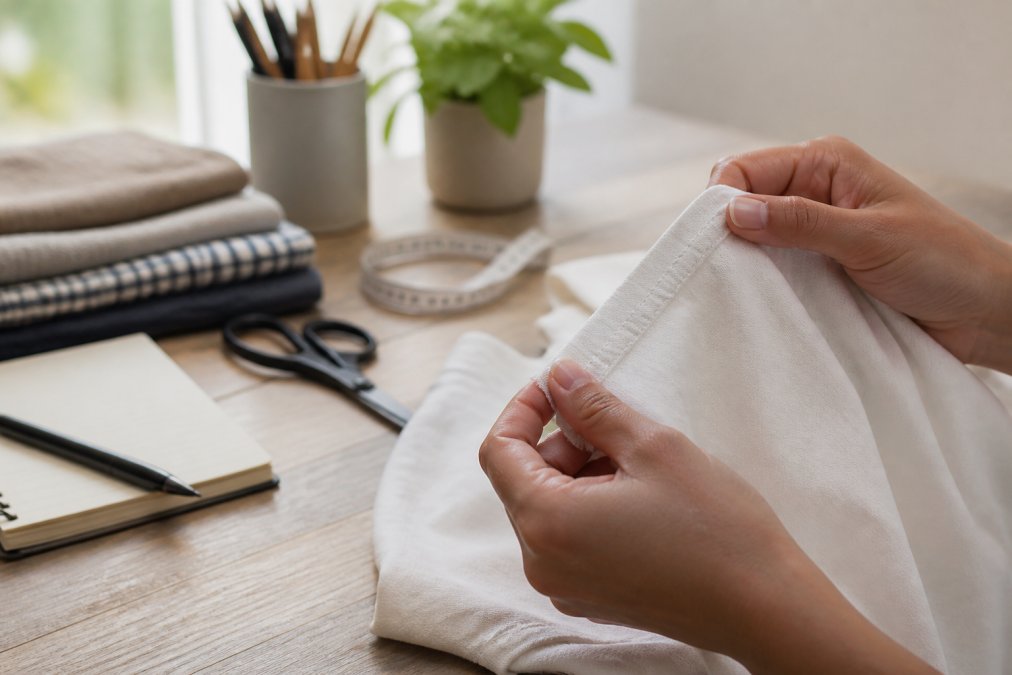
You can judge most garments in under a minute by checking three things: fabric content, seam integrity, and whether the construction matches the price. This is the skill that separates a wardrobe built to last from a pile of regrettable purchases.
Fabric Durability: Natural Fibers vs Synthetic Blends
Natural fibers like organic cotton, linen, hemp, and wool breathe, age well, and can be mended. Synthetic blends cost less to produce but pill, hold odors, and shed microplastics with every wash.
Checking Seam Integrity and Garment Construction
Turn the piece inside out. Look for finished seams, even stitching, and no loose threads. A common mistake is judging only the outside, where a cheap garment can look identical to a well-made one.
Decoding Greenwashing: What Labels Actually Mean
"Eco-friendly," "conscious," and "planet-positive" are marketing terms, not regulated standards. Greenwashing is the practice of making a brand appear environmentally responsible through vague or misleading claims that no third party verifies.
How to Build a Capsule Wardrobe That Works
A capsule wardrobe is a small, coordinated set of garments you actually wear, typically 30 to 40 pieces including shoes, outerwear, and accessories. The point is not minimalism for its own sake. The point is that fewer, better pieces means less decision fatigue, fewer panic purchases, and a much harder time justifying an impulse buy.
Cost-Per-Wear Is the Only Math That Matters
Cost-per-wear is the purchase price divided by the number of times you actually wear the item. It reframes a cheap purchase as an expensive one.
- A $60 shirt worn 60 times costs $1.00 per wear.
- A $10 shirt worn twice costs $5.00 per wear.
- A $200 pair of boots worn 200 times costs $1.00 per wear.
The Wardrobe Audit: What to Keep, Donate, or Repair
Do this in one sitting, with everything visible. Pull every garment out of the closet and drawers. Do not skip the back of the closet, that is where the regret purchases live.
- Keep: anything worn in the last 12 months that still fits and is not visibly worn out
- Repair: items with a loose seam, missing button, or small hole, these are not done yet
- Donate or swap: anything unworn for a year with no specific occasion in mind
- Retire: garments too worn to mend, or that no longer fit and cannot be altered affordably
The Ratios That Keep a Capsule Functional
A capsule that is all tops and no bottoms does not work. A practical starting ratio for a 30- to 40-piece capsule is roughly:
- 8 to 10 tops
- 4 to 6 bottoms
- 3 to 4 layers (cardigans, blazers, overshirts)
- 2 to 3 dresses or one-piece options
- 3 to 4 pairs of shoes
- 2 to 3 outerwear pieces
- Accessories as needed, but not counted toward the core
Build in Phases, Not in One Shopping Trip
Do not buy a new capsule in a weekend. That is just fast fashion with a different label. Build in three phases:
- Phase one (weeks 1-4): Wear only what survived the audit. Note what you reach for and what you avoid. This tells you your real preferences, not your aspirational ones.
- Phase two (weeks 5-8): Fill the top two or three gaps with quality pieces. One purchase at a time, cost-per-wear checked first.
- Phase three (ongoing): Replace items only as they wear out. A capsule is maintained, not rebuilt.
Why This Beats the Alternative
A capsule wardrobe is not a restriction. It is a filter. When every piece in your closet is something you actually wear, the urge to buy a $12 top because it is on sale loses most of its power. You already have a top. You do not need another one. That is the trap, defused.
Thrifting, Second-Hand, and Budget-Friendly Alternatives
Second-hand shopping is the fastest route to sustainable fashion on a budget. Thrift stores, consignment shops, online resale, and clothing swaps all extend a garment's life and keep textiles out of landfills.
What Sustainable Clothing Brands Get Right
Brands that avoid fast fashion traps tend to share a few traits: they publish where and how garments are made, they use natural fibers, and they design pieces meant to outlast trends. They also tend to cost more up front, which is the trade-off for quality over quantity.
Repair, Mend, and Upcycle: Making Clothes Last Longer
Most fast fashion guides tell you to "care for your clothes" and stop there. That is not actionable. The actual skill is mending, and it is the single highest-leverage habit for breaking the fast fashion cycle, because a garment you can repair is a garment you do not replace.
The Starter Kit
You do not need a sewing machine. A basic hand-sewing kit costs very little and covers almost everything:
- Hand-sewing needles in a few sizes
- Thread in black, white, navy, and gray (these match most garments)
- A small pair of sharp scissors or thread snips
- Straight pins
- A seam ripper
- A thimble, if you plan to work with denim or canvas
Skill 1: Re-Sewing a Button
This is the most common repair and the easiest to learn. A missing button does not mean a shirt is done.
- Thread the needle and knot the end. Use doubled thread for strength.
- Bring the needle up through the fabric from the back, at the button's original position.
- Pass through one hole of the button, then down through the fabric.
- Repeat through the opposite hole. For a four-hole button, work in an X or parallel pattern.
- After three or four passes, bring the needle up under the button but not through it, wrap the thread around the stitches a few times to create a shank, then knot on the underside.
Time: about five minutes per button.
Skill 2: Closing a Split Seam
A seam that has come apart at the armpit, crotch, or side is usually a 10-minute fix, not a reason to discard the garment.
- Turn the garment inside out.
- Align the two raw edges of the seam.
- Thread a needle with matching thread and knot the end.
- Work a backstitch: bring the needle up through both layers, then back down just behind where it came up, creating overlapping stitches. Backstitch is stronger than a simple running stitch and mimics a machine seam.
- Knot off on the inside and trim the thread.
Time: about 10 minutes.
Skill 3: Darning a Small Hole
Darning is weaving new thread into a hole to rebuild the fabric. It works best on knits, socks, and sweaters.
- Turn the garment inside out and place a darning mushroom or a smooth rounded object (a small bowl works) under the hole to hold the fabric flat.
- Thread a needle with matching or complementary yarn.
- Work a series of parallel stitches across the hole, spanning from solid fabric on one side to solid fabric on the other. Do not pull tight, the fabric needs to lie flat.
- Work a second series of stitches perpendicular to the first, weaving over and under the first set like a lattice.
- Knot off on the inside and trim.
What to Do When a Garment Is Genuinely Finished
Some pieces cannot be saved. When that happens, upcycling keeps the material out of the landfill:
- Cotton t-shirts and towels: cut into cleaning rags. No sewing required.
- Denim: cut into squares for quilt patches, potholders, or a tote bag. Denim is heavy and durable.
- Wool sweaters: felt them by washing in hot water and drying, then cut and sew into mittens, coasters, or cushion covers.
- Buttons and zippers: cut them off and save them. A spare button is a future repair for another garment.
- Old sheets: cut into strips for rag rugs or use as backing fabric for patches.
| Problem | Fix | Time | Impact |
|---|---|---|---|
| Loose button | Re-sew with shank | 5 min | Extends wear by years |
| Split seam | Backstitch closed | 10 min | Prevents total garment loss |
| Small hole | Darn with matching thread | 15-20 min | Keeps item wearable |
| Stained shirt | Dye or repurpose | 30+ min | Avoids landfill waste |
| Worn-out fabric | Upcycle into rags, bags, or patches | Varies | Diverts textile waste |
Frequently Asked Questions
What are the most common signs of fast fashion?
Fast fashion garments typically show telltale signs: unusually low prices, synthetic blends like polyester and acrylic, thin fabric you can see through, loose or uneven stitching, and trendy designs that disappear within weeks. These items are designed for a short lifespan. Check for single-stitch seams, plastic zippers, and care labels that list mostly synthetic materials. If a shirt costs less than a coffee and feels flimsy, it's likely a fast fashion trap.
How can I build a sustainable wardrobe on a budget?
Start with a wardrobe audit to see what you already own and wear. Then shop second-hand stores, clothing swaps, and thrift shops for quality pieces. Focus on cost-per-wear: a $60 jacket worn 100 times costs $0.60 per wear, while a $15 top worn twice costs $7.50 per wear. Prioritize natural fibers like cotton, linen, and hemp, and learn basic mending skills to extend garment longevity. Buying less and buying better beats buying cheap repeatedly.
How do I identify high-quality clothing that will last?
Check three things: fabric, construction, and finish. Natural fibers like organic cotton, linen, and hemp breathe better and age well. Look for tight, even stitching with no loose threads. Seams should be reinforced at stress points. Buttons should be securely attached, and zippers should glide smoothly. Turn the garment inside out to inspect seam integrity. Quality clothing often feels heavier and drapes better than synthetic alternatives. These checks help you avoid fast fashion traps before you spend.
Is it possible to be stylish while avoiding fast fashion?
Absolutely. Slow fashion and second-hand shopping offer unique, expressive pieces you won't see on everyone else. Thrifted and vintage items often have better construction than new budget clothing. Building a capsule wardrobe around neutral basics and a few statement pieces lets you mix and match without constant buying. Independent designers and small brands create original graphic apparel and accessories that reflect personal identity. Style comes from how you combine pieces, not how often you buy new ones.
What is the difference between slow fashion and fast fashion?
Fast fashion prioritizes speed and low cost, producing trendy items in large quantities with synthetic materials and short lifespans. Slow fashion emphasizes quality over quantity, ethical production, natural fibers, and timeless designs meant to last years. Slow fashion brands often use organic cotton, hemp, or linen and focus on garment longevity. The fast fashion cycle encourages impulse buying and textile waste, while slow fashion promotes conscious consumerism and a smaller environmental footprint.
Why is fast fashion considered harmful to the environment?
Fast fashion drives textile waste, water pollution, and microplastics. Synthetic fabrics shed plastic fibers in the wash that enter waterways. Producing cheap clothing uses massive water and energy resources. When garments wear out quickly, they end up in landfills. Textile recycling infrastructure can't keep pace with production volume. Choosing natural fibers, thrifting, and repairing clothes reduces your environmental footprint and supports a circular economy instead of the fast fashion cycle.
Breaking the fast fashion cycle isn't about willpower; it's about knowing what you're buying and why. DeezTeezPleez makes that easier with original, owner-designed apparel and home goods built to bring personality to everyday life, not to chase a trend. Explore the collection, find a piece you'll actually wear for years, and shop now.