

Table of Contents
- What Makes Independent Artist Apparel Different
- Original Artwork and Distinctive Visual Design
- Personal Style and Self-Expression Through Wearable Art
- How to Find Independent Clothing Brands That Fit Your Vision
- Quality Graphic Apparel: What Sets Independent Designs Apart
- How to Style Graphic Tees and Accessories for Maximum Impact
- The Real Value: Supporting Artists and Sustainable Choices
- Frequently Asked Questions
Last Updated: October 11, 2026
What Makes Independent Artist Apparel Different
Independent artist apparel channels creative vision directly into wearable design, reflecting an individual's artistic perspective rather than corporate strategy. The designs carry intention, personality, and originality that factory-line production cannot replicate.
At DeezTeezPleez, each piece starts with an artist's concept and carries through to the finished product with that vision intact. Colors aren't chosen by algorithm, composition isn't tested against focus groups, and artwork exists because someone believed it deserved to exist.
This authenticity shapes everything: material selection, production runs, pricing, and brand evolution, independent creators optimize for expression and craft, not scale and predictability.
Original Artwork and Distinctive Visual Design
Original artwork is the foundation of independent artist apparel. Every design carries the maker's creative fingerprint, color palette, composition technique, and conceptual approach, and won't be mass-produced across multiple retailers or printed on cheap blanks.
Independent designs tackle subjects and styles mainstream brands avoid, abstract interpretations, surreal portraiture, niche cultural references, and unconventional color combinations. Our Abstract Art T-Shirt features garment-dyed 100% US cotton with double-needle stitching, prioritizing artistic expression over broad appeal.

Limited production runs create natural scarcity, preserving the exclusivity and artistic integrity independent artists depend on.
Personal Style and Self-Expression Through Wearable Art
Wearing independent artist apparel is personal communication, your clothing choices signal what matters to you and how you see yourself.
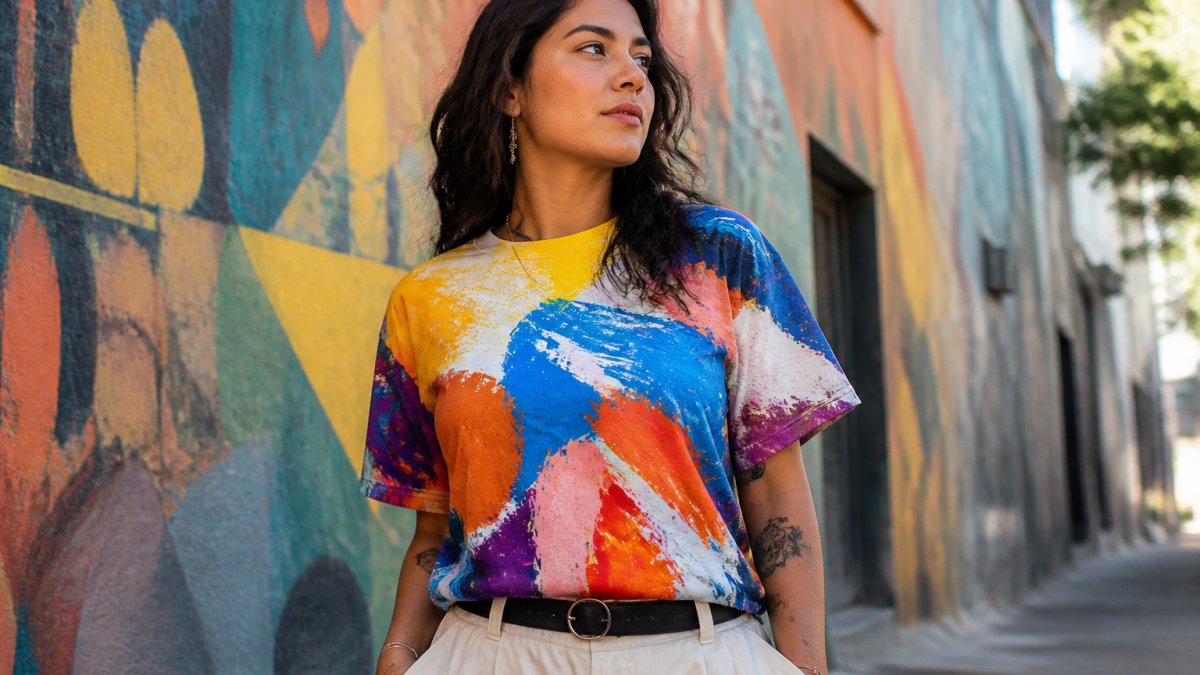
Mass-market clothing is designed for broad acceptance; independent artist apparel is designed for specific recognition. Wearing wearable art that reflects your actual interests creates authentic self-expression, you're wearing a curator's choice that represents your taste and personality.
This distinction matters for people who reject conformity in their wardrobe. Independent artist pieces carry hand-crafted authenticity with contemporary design sensibilities, appealing to thrifting enthusiasts and art lovers alike.
How to Find Independent Clothing Brands That Fit Your Vision
Discovering independent clothing brands requires a different approach and vetting process to avoid counterfeit listings or misleading claims.
Step 1: Identify Your Visual Style
Clarify what resonates with you, abstract design, surreal imagery, cultural references, vintage aesthetics, or color palettes, to recognize authentic work that matches your taste.
Step 2: Use Verified Discovery Channels
Direct artist websites are your strongest starting point. Look for artist portfolio sites with process documentation, creator platforms like Etsy (filter by "Shop Owner" status), Redbubble (artist verification badges), social media communities around specific aesthetics, and curated indie directories.
Step 3: Verify Artist Authenticity and Originality
Before purchasing, apply this checklist:
- Artist identity: Find a real person's name, face, and biography. Vague "collective" claims warrant skepticism.
- Design originality: Reverse-image search on Google Images. If it appears on multiple unrelated storefronts, it's likely counterfeit.
- Production transparency: Creators should explain design process, material sourcing, printing technique, and manufacturing location. Vague claims are red flags.
- Consistency: Do designs reflect a coherent creative vision or trend-chasing templates?
- Seller history: Check shop age, review count, and review content. New shops with perfect ratings or reviews mentioning only "fast shipping" are suspicious.
Step 4: Understand the Revenue Model
Ask yourself: where does my money go?
- Direct-to-artist sales: 100% goes to the artist minus payment processing fees (2-3%). Most direct support.
- Print-on-demand platforms: Artist receives $3-$8 per shirt royalty. Platform handles production and shipping.
- Wholesale or consignment: Retailer takes 40-50%, artist receives remainder.
If a brand doesn't clearly state the revenue split, ask directly before purchasing.
Step 5: Evaluate Accessibility and Reliability
Before committing, verify:
- Size range: Does the brand offer XS-3XL or only S-L? Inclusive sizing signals investment in serving diverse customers.
- Shipping and returns: What's the return window? Do they ship internationally? How long is fulfillment (made-to-order vs. in-stock)?
- Price consistency: Do prices fluctuate wildly, or are they stable? Sudden discounts on new designs can indicate overstock or desperation rather than intentional pricing.
This vetting process takes 10-15 minutes per brand but eliminates counterfeit purchases, supports actual artists, and ensures you're buying from creators who stand behind their work.
Quality Graphic Apparel: What Sets Independent Designs Apart
Quality in independent graphic apparel manifests across three distinct areas, material, construction, and printing durability, each with measurable differences that affect how long a piece remains wearable and its true cost-per-wear.
Material Selection and Performance
Independent creators typically invest in superior base garments because their reputation depends on customer satisfaction rather than quarterly earnings targets. Key material considerations:
- Fabric weight: Measured in ounces per square yard (oz/yd²). Standard mass-market t-shirts use 4.0-4.5 oz/yd² fabric; quality independent pieces use 5.0-6.0 oz/yd². Heavier fabric resists pilling, holds shape through repeated washing, and feels substantial rather than flimsy. Our Abstract Art T-Shirt uses 100% US cotton, garment-dyed for softness and color retention.
- Fiber content: 100% cotton breathes and ages well; cotton-polyester blends (80/20 or 90/10) resist wrinkles and shrinkage but can feel synthetic. Independent creators often choose 100% cotton despite higher cost because it delivers the tactile quality their customers expect.
- Dye method: Garment-dyed (dyed after construction) produces softer, more vintage-feeling fabric than piece-dyed (dyed before cutting). Garment-dyed also creates natural color variation that ages beautifully. This costs 15-25% more but extends the piece's visual lifespan.
Construction and Durability
How a shirt is assembled determines whether seams hold through years of wear or fail after a season:
- Seam reinforcement: Double-needle stitching (two parallel threads instead of one) reinforces stress points, shoulders, armholes, side seams. Single-needle seams are cheaper and fail faster. Independent creators use double-needle as standard; mass-market brands reserve it for premium lines.
- Collar and cuff binding: Ribbed collars and cuffs should be stitched with a cover stitch (a specialized machine stitch that locks the binding in place). Cheaper alternatives use a single row of stitching that unravels after 20-30 washes.
- Hem quality: A proper hem uses a cover stitch or flatlock stitch that distributes tension evenly. Poor hems pucker, curl, or separate from the garment body within months.
To assess construction before purchasing, examine product photos closely: Are seams straight and consistent? Does the collar sit flat? Are hems even? Independent creators often include close-up construction photos because they're proud of these details.
Printing Technique and Longevity
The printing method determines how long artwork survives washing, wearing, and sunlight:
- Direct-to-garment (DTG) printing: Ink is sprayed directly onto the fabric using inkjet technology. Advantages: photorealistic detail, soft hand-feel, works on any color garment. Disadvantages: fades noticeably after 30-50 washes, ink can crack if the garment is stretched. Best for designs with fine detail or photographic imagery. Cost: $8-$15 per shirt.
- Screen printing: Ink is pushed through a mesh screen onto the garment. Advantages: extremely durable (100+ washes), vibrant colors, affordable at scale. Disadvantages: limited to 4-6 colors per design, requires separate screens per color, not ideal for photorealistic images. Best for bold, graphic designs with limited color palettes. Cost: $4-$10 per shirt depending on color count.
- Discharge printing: A chemical removes the garment's dye, then new color is applied. Advantages: extremely soft hand-feel, vintage appearance, durable. Disadvantages: only works on dark fabrics, limited color range, most expensive technique. Cost: $12-$20 per shirt.
- Embroidery: Thread is stitched into the garment. Advantages: extremely durable, premium appearance, three-dimensional texture. Disadvantages: limited to simple designs, expensive, can feel stiff. Cost: $15-$40 per shirt depending on stitch count.
Independent creators who care about longevity choose techniques that preserve image quality across dozens of wash cycles rather than techniques that fade predictably. Ask the creator which method they use; if they can't answer, that's a warning sign.
Cost-Per-Wear Calculation
Price alone doesn't reflect value. Consider durability:
- A $17.78 independent artist tee with double-needle stitching might last 150 wears (3+ years of regular rotation) before fading noticeably. Cost-per-wear: $0.12.
- A $9.99 mass-market tee with 4.2 oz cotton, single-needle seams, and DTG printing might last 40 wears (8-10 months) before seams fail or image cracks. Cost-per-wear: $0.25.
The independent piece costs 78% more upfront but costs 52% less per wear.
Trade-Offs and Limitations
Independent quality comes with practical constraints:
- Limited stock: Popular designs sell out. If you love a piece, purchase it immediately rather than waiting for a sale.
- Sizing variability: Independent creators often work with different manufacturers per production run. A medium from one batch might fit differently than a medium from another. Check size charts carefully and ask the creator about fit before purchasing.
- Longer fulfillment: Made-to-order independent pieces take 2-4 weeks to produce and ship, versus 2-3 days for mass-market inventory. Plan accordingly.
- Price: Quality materials and ethical production cost more. Expect to pay more for independent graphic tees versus mass-market equivalents.
These trade-offs are worth the investment if you prioritize durability, originality, and artist support over convenience and low price.
How to Style Graphic Tees and Accessories for Maximum Impact
Styling independent artist apparel effectively means treating each piece as a conversation starter rather than background filler. The artwork deserves visual space and attention within your overall outfit.
Pair bold graphic tees with neutral bottoms, solid jeans, minimalist trousers, or monochromatic skirts, so the design remains the focal point. Avoid competing patterns that dilute the artwork's impact.
Accessories from independent creators amplify the aesthetic. Our CynAPar Original Art Cotton Canvas Tote Bag ($19.22) features 100% heavy 12 oz cotton canvas with reinforced handles, practical enough for daily use while displaying the same artistic vision.

For more conservative styling, treat independent artist pieces as statement layers. Wear a graphic tee as an undershirt beneath a blazer, visible only at the neckline and sleeves. This approach works particularly well for professionals aged 40-55 who want personality in their wardrobe without abandoning workplace expectations.
The Real Value: Supporting Artists and Sustainable Choices
Purchasing independent artist apparel directly supports creative individuals who depend on sales to continue making work. When you buy from an independent creator, you're funding their next project, their studio investment, and their ability to continue creating.
The sustainability argument holds genuine weight. Independent creators typically produce smaller batches, which means less overstock waste. They're incentivized to create designs people actually want to wear repeatedly rather than designs optimized for impulse purchases.
Transparency about production methods becomes possible at independent scale. Our Psychedelic-ly Lit Abstract Face Duffel Bag ($53.14), assembled in the USA from global parts, exemplifies this approach, specific enough that you understand exactly what you're purchasing.

Independent artist apparel brands offer something mass-market retailers fundamentally cannot: authentic creative expression paired with intentional craftsmanship. Our graphic tees, accessories, and home goods are designed to bring personality and style to everyday life. Shop Now and discover apparel that's unconditionally loved by people who refuse to blend in.
Frequently Asked Questions
Why should I choose independent artist apparel brands over mass-market retailers?
Independent artist apparel gives you original designs you won't see everywhere, direct support for creative talent, and pieces crafted with intention. Each purchase funds an artist's work and creative vision. You get authentic self-expression instead of mass-produced trends, plus quality construction designed to last. Independent brands often use better materials and ethical production practices because the artist stands behind their work personally.
How can I tell if an independent clothing brand is good quality?
Check the materials listed, quality independent brands specify fabric content, weight, and construction details. Look for double-needle stitching, natural fibers like 100% cotton, and garment-dyed or print techniques that hold up to washing. Read customer reviews for durability feedback. Visit the brand's website for transparency about where items are made and how they're produced. Reputable independent designers provide care instructions, showing they stand behind their products.
How do I find independent clothing brands that match my personal style?
Start with curated online directories and marketplaces focused on independent designers. Follow artists on social media to discover emerging brands. Attend art markets, craft fairs, and pop-up shops where independent creators sell directly. Join communities around your interests, vintage enthusiasts, art lovers, music fans, where recommendations flow naturally. Look for brands with transparent artist bios and clear design inspiration. Many independent brands share their creative process, helping you connect with the vision behind each piece.
Are independent artist apparel brands more sustainable and ethical?
Many independent brands prioritize sustainability and ethical production because the artist controls the entire process and cares about their reputation. They often use quality materials meant to last longer, reducing waste. Smaller production runs mean less overstock. However, not all independent brands are automatically sustainable, check their sourcing, production location, and material choices. Look for brands that openly discuss their practices and supply chain. Independent artists typically have more direct control over ethical standards than large retailers, but always verify their specific practices.